Across advanced engineering sectors, data has become the quiet infrastructure holding entire value chains together. Whether in automotive, materials, energy, aerospace or electronics. Decisions worth millions hinge not simply on whether a measurement is accurate but whether it is defensible.
Most organisations do not fail because they lack procedures. They fail because they confuse paperwork with capability. A controlled document does not stabilise a measurement system. A signed training record does not create technical judgement. An annual audit does not guarantee daily integrity. When commercial pressure, delivery deadlines or internal politics begin to influence how data is generated, reviewed or interpreted the standard is already compromised but the certificate is still intact. Accreditation does not protect against weak leadership. It will expose it.
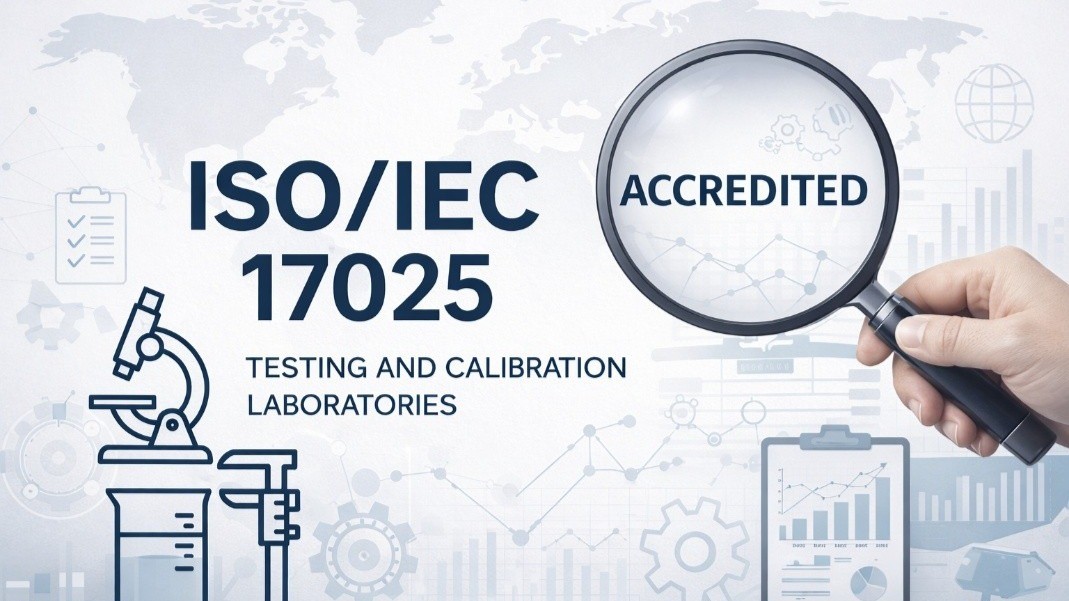
This is where ISO 17025 stands apart. It is not merely a certificate, a procurement checkbox or a quality badge. It is a competence framework, one that demands technical integrity, structural impartiality and evidence based assurance. When implemented properly, it becomes a strategic asset that strengthens capability, reinforces culture and builds durable customer confidence.
For transparency; all reflections are my own and draw on years of cross-sector experience not on any single engagement, employer or client.
What ISO/IEC 17025 Really Ensures:
ISO 17025 is often misunderstood as a documentation exercise. In reality, it is a technical governance system that requires laboratories to prove that they are competent.
A truly compliant laboratory demonstrates:
1. Valid, repeatable and traceable results:
Not just ‘accurate’, but supported by uncertainty budgets, method validation and stable measurement systems.
2. Methodological rigour:
Methods must be validated, controlled and continually reviewed.
3. Equipment control and calibration discipline:
Calibration is a risk based system not a calendar event.
4. Impartiality and independence:
Structures must protect results from commercial or operational pressure.
5. Competence of personnel:
Training, assessment and authorisation must be demonstrable.
6. A living quality system:
Non conformities drive improvement not fear.
ISO 17025 is built on a simple principle that ‘trust must be earned, demonstrated and maintained’.
Why It Matters More Than Ever:
As industries accelerate toward electrification, autonomy and AI assisted design. The cost of unreliable data has grown exponentially. A single unverified measurement can trigger:
– Engineering churn.
– Safety exposure.
– Regulatory delays.
– Warranty and recall risk.
– Reputational damage.
In a world where data flows across borders and digital ecosystems, ISO 17025 provides a structured, internationally recognised way to ensure that data is not only accurate but defensible under scrutiny.
Strategic Advantages Beyond Compliance:
When embraced as a strategic enabler, ISO 17025 delivers benefits far beyond the laboratory.
1. Faster, more confident decision making:
Reliable data reduces debate, rework and ambiguity.
2. Stronger customer and regulator trust:
Accreditation signals maturity, capability and accountability.
3. Reduced operational and reputational risk:
Robust controls prevent drift, error and inconsistency.
4. Global recognition through Mutual Recognition Agreements (MRA):
Accredited results can travel across borders without retesting.
5. A culture of technical excellence:
It elevates expectations across engineering, operations and leadership.
6. A foundation for digital transformation:
Digital twins, AI driven design and model based development all depend on trustworthy data.
Lessons From Real World Implementation:
Those who have worked within accredited environments quickly learn that ISO 17025 can succeed or fail on leadership, structure and culture.
A few truths consistently do emerge:
1. Competence beats documentation:
A procedure is only as strong as the operator’s understanding and the stability of the measurement system behind it.
2. System architecture matters:
ISO 17025 cannot be ‘bolted on’. It must be designed into workflows, responsibilities and controls.
3. Measurement uncertainty is a strategic issue:
It shapes risk, decision making and customer assurance.
4. Audit readiness is a cultural state:
The best labs don’t prepare for audits. They operate every day as if an assessor could walk in at any time.
5. External assessment is a partnership:
Constructive engagement with assessors strengthens capability.
6. Accreditation is a milestone, competence is the journey:
The certificate is the outcome. The mindset is what endures.
Where Consultancy Adds Value
The inflection point usually appears during one of three triggers:
1. Rapid growth or facility expansion.
2. Digital engineering transformation.
3. Regulatory scrutiny or market access pressure.
At these moments, ISO 17025 can either become a bottleneck or a strategic accelerator.
Effective advisory intervention typically focuses on:
– Measurement system architecture redesign.
– Uncertainty governance alignment with enterprise risk frameworks.
– Organisational competence modelling.
– Independent gap diagnostics beyond checklist audits.
– Leadership alignment around technical integrity.
The objective is not just accreditation but a defensible capability.
Looking Ahead:
ISO 17025 is not a legacy standard. It is a future proofing mechanism that is still required.
As digital engineering, automation and AI reshape our industries. The integrity of measurement data becomes more existential.
As such, organisations that invest in competence today will be the ones that will be trusted tomorrow.
If you are responsible for engineering, testing or quality. Now is the moment to ask if using ISO 17025 is a compliance requirement or a strategic asset?
If perhaps you’d value an independent view on where capability truly sits, I’m always open to a conversation. By all means, please DM.
James Gamble
17/02/2026